Deepfakes vs Voice Clones: What's the Difference and Which Is More Dangerous?
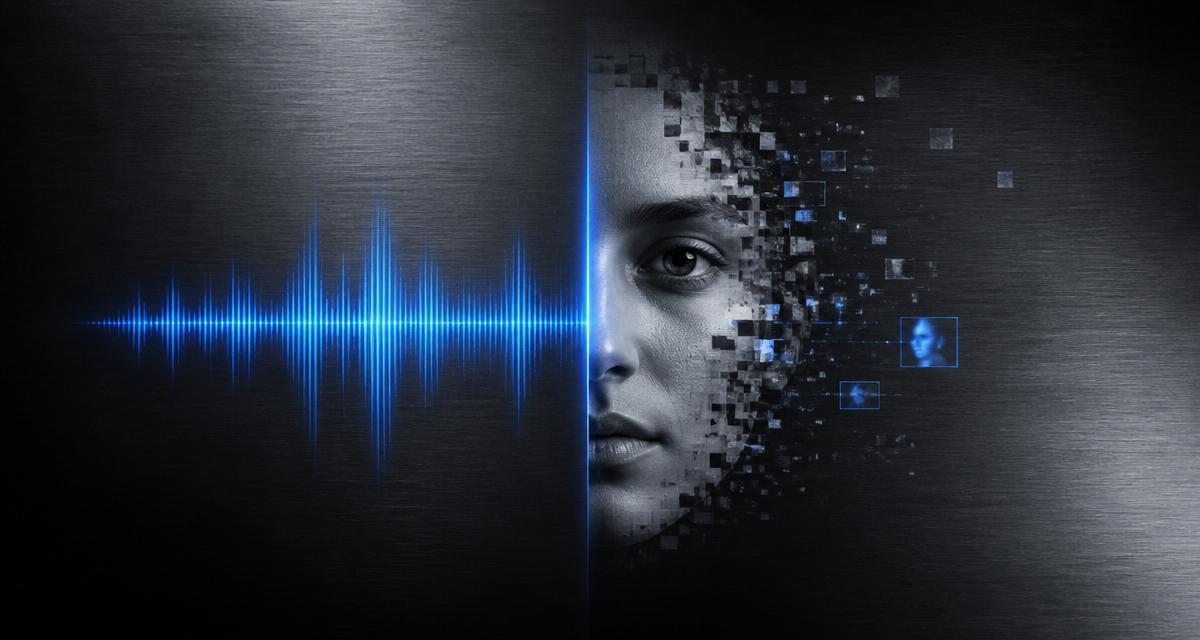
The terms deepfake and voice clone are often used interchangeably, but they are not the same thing. Understanding the difference matters because they pose different risks and require different defenses. A voice clone is AI-generated audio that sounds like a specific person. A deepfake is AI-generated video that shows a person saying or doing something they never did. This guide breaks down both, compares them head to head, and shows you exactly how to defend against each.
Key takeaways
- Voice clones and deepfakes are different threats. Clones are audio-only; deepfakes are primarily video.
- Voice clones are the current priority, used in the majority of AI scams targeting seniors.
- Deepfakes are still less common but improving fast and will increase.
- Combined voice and video attacks are emerging and nearly undetectable by look and sound alone.
- Verification is your best defense: ask personal questions and call back on a known number.
- Trust your instincts. If something feels wrong about the interaction, it probably is.
The clear definition: what each one is
A voice clone, or synthetic voice, is AI-generated audio that sounds like a specific person. Just the voice, no video. It is used on phone calls, voice messages, and audio-only interactions.
A deepfake is AI-generated video that shows a person saying or doing something they never did. It sometimes includes a cloned voice, and sometimes it is just manipulated video with original audio. The key distinction is simple: voice cloning is audio-only, and deepfakes are primarily visual.
Voice clones explained
A voice clone is synthetic audio created using AI trained on samples of a real person's speech. It replicates the unique characteristics of that voice so new words can be generated in it.
How it is created
- 1.Collect 10 to 60 seconds of someone's voice from videos, voicemails, or social media.
- 2.Upload it to an AI voice cloning service.
- 3.The AI learns the unique characteristics of that voice.
- 4.New words and sentences are generated in that person's voice.
- 5.The cloned voice is deployed on phone calls or in messages.
Timeline: 30 minutes to 2 hours from collection to deployment. Cost: $50 to $500 depending on quality and tools. It is used for phone calls impersonating family or authorities, voicemail and messaging-app voice notes, automated scam calls, and social engineering calls to businesses.
Threat level: very high
Voice cloning is the number one AI-powered scam targeting seniors right now. It is cheap and easy, hearing a loved one's voice creates instant emotional urgency, it deploys in hours, it works on any regular phone, and scams often complete within 30 to 60 minutes.
In 2024, voice cloning scams targeting seniors caused an estimated $1 to $2 billion in losses. The FBI reported $893 million, and actual losses are typically two to three times what gets reported.
How voice clones are used in scams
- The grandparent scam: a grandchild's cloned voice calls claiming an accident, legal trouble, or emergency and needs money.
- The medical scam: a doctor's cloned voice says test results are abnormal and payment is needed for an urgent procedure.
- The bank scam: a bank representative's cloned voice claims fraud was detected and asks you to confirm account details.
- The tech support scam: an IT support voice says your computer has a virus and needs remote access.
- The romance scam: a romantic interest's cloned voice builds trust before asking for money.
Deepfakes explained
A deepfake is AI-generated video that digitally creates or manipulates footage to show someone saying or doing something they never did. The term comes from deep learning plus fake.
How it is created
- 1.Collect many photos or videos of the target's face, usually 50 to 100 or more images.
- 2.Use AI video synthesis software.
- 3.The AI learns facial movements, expressions, and characteristics.
- 4.New video is generated showing that person's face speaking new words.
- 5.Audio, real or cloned, is added to the video.
- 6.The video is published or sent as supposed proof.
Timeline: several hours to several days depending on quality. Cost: $100 to $1000 or more. It is used for viral misinformation, blackmail and extortion, impersonating public figures, creating fake evidence, and non-consensual intimate content.
Threat level: moderate to high and increasing
Deepfakes are less commonly used for direct senior scams today, but emerging threats include authority impersonation, blackmail over intimate fakes, misinformation to confuse financial decisions, and family impersonation on video calls.
They are less common than voice cloning because they take longer to create, require a video call to deploy, let the victim see a face and notice something is off, and often still contain telltale artifacts.
Head-to-head comparison
| Factor | Voice clone | Deepfake |
|---|---|---|
| Creation time | 30 min to 2 hrs | Several hours to days |
| Cost | $50 to $500 | $100 to $1000+ |
| Technical skill needed | Low, uses existing tools | Moderate to high |
| Detectability | Moderate, audio artifacts | Moderate to high, video artifacts |
| Deployment speed | Very fast, instant calls | Requires a video platform |
| Current threat to seniors | Very high | Moderate and emerging |
| Psychological impact | Very high, voice is personal | High, but video invites suspicion |
| Used in active scams | Heavily, most AI scams | Less common but growing |
The most dangerous scenario: combined attacks
The biggest emerging threat is voice cloning and video deepfake used together. Imagine a video call from your grandson: you see his face and hear his voice, and he needs money for an emergency. The video is a deepfake and the voice is a clone. Together they create a nearly undetectable impersonation.
Defense
This is still rare because it requires both skills and resources, but it is becoming more feasible. Ask questions that require personal knowledge, or ask for a callback. Live deepfakes cannot respond naturally to unexpected questions.
How to detect each type
Detecting voice clones
- Unnatural pacing or rhythm.
- No background noise.
- Overly clear audio.
- Flat emotional delivery.
- No natural speech stumbles.
Most reliable defense: hang up and call back using a known number.
Detecting deepfakes
- Unnatural blinking patterns, either too rare or too frequent.
- Unnatural head movements, with slight jerking or unnatural fluidity.
- Face and background edges that do not blend smoothly.
- Inconsistent lighting between the face and the background.
- Unnatural, plastic, or overly smooth skin texture.
- Lips that do not perfectly match the audio.
- Odd eye contact or eyes that do not focus correctly.
- Blurring or pixelation around the edges of the face.
Most reliable defense: ask questions or request a callback. Deepfake videos cannot respond naturally to unexpected questions in real time.
Real incident: a deepfake attempt gone wrong
A 71-year-old woman in California received a video call from what appeared to be her grandson. She could see his face and hear his voice. He claimed to be in legal trouble and needed $15,000 immediately.
Why she caught it
- 1.The call came through a VoIP platform, not a regular phone, which was unusual.
- 2.When she asked about his current job, the video did not respond naturally and there was a delay.
- 3.She asked him to show his driver's license, and the video froze momentarily.
- 4.She said, "I'm going to call your parents directly," and the call ended.
A scammer using deepfake video, with a cloned or real voice, tried to convince her of an emergency. Her instinct to verify by asking questions and offering to call family exposed the deception. No money was sent, and she reported it to the FBI.
The defense strategy: what actually works
For voice clones
- Most effective: hang up and call back.
- Secondary: ask personal questions AI cannot answer.
- Tertiary: listen for audio artifacts.
- Not effective: trying to detect it by audio quality alone.
For deepfakes
- Most effective: ask questions or request a callback, since live deepfakes cannot respond naturally.
- Secondary: look for visual artifacts.
- Tertiary: trust your instincts when something feels off.
- Not effective: assuming video equals authenticity.
For combined attacks
- Most effective: ask personal questions requiring specific knowledge.
- Secondary: request to call back later and verify independently.
- Tertiary: a regular phone video call with a delay can reveal a deepfake.
- Not effective: trusting both video and audio together.
What you should do now
- 1.Tell family members about both threats so everyone knows voice cloning and deepfakes exist.
- 2.Establish a family verification system using code words and personal questions.
- 3.Practice the callback: if someone calls claiming to be family, hang up and call back.
- 4.Stay informed, because these technologies are evolving quickly.
The bottom line
Voice clones are the bigger threat today, but deepfakes are catching up and combined attacks are coming. No matter how convincing the voice or the face, verification is what protects you: ask questions only the real person could answer, and call back on a number you already have.
Frequently asked questions
What is the difference between a deepfake and a voice clone?
A voice clone is AI that copies how someone sounds (audio only). A deepfake copies how someone looks (video). Voice cloning is currently the bigger threat to seniors because it only needs a phone call.
Which is more dangerous right now?
Voice cloning. It is cheaper, faster to produce, works on normal phone systems, and exploits the instant emotional urgency of hearing a loved one's voice.
How cheap is this technology for scammers?
Voice cloning that cost thousands of dollars a few years ago is now available for roughly $50 to $500, which is why these scams are spreading quickly.
Want the full playbook?
Scam-Proof Senior gathers every strategy into one practical, plain-language book.
Disclaimer: This article is educational information only and is not professional legal, financial, medical, or cybersecurity advice. Laws, security threats, and scam tactics change frequently. If you need help with taxes, legal issues, finances, or critical security decisions, consult a qualified professional. Following this information does not guarantee protection from scams or fraud. Report suspected scams to the FBI (IC3.gov) or FTC (reportfraud.ftc.gov).