Voice Cloning Scams: The Complete Guide for Seniors in 2026
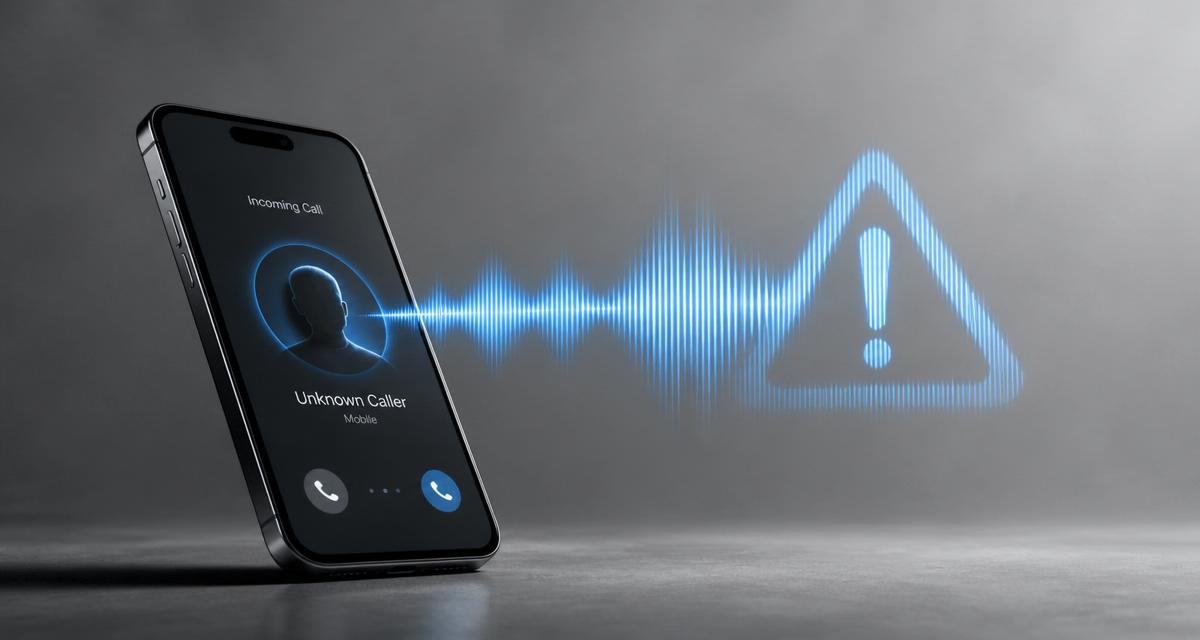
Voice cloning has moved from science fiction to everyday reality. A scammer can copy someone's voice using just 10 to 30 seconds of audio, then call you claiming to be your grandchild in an emergency, your doctor with urgent news, or your bank detecting fraud. The worst part is that you likely will not know it is AI. This guide covers how these scams work, how to spot them, and exactly what to do if you are targeted.
Key takeaways
- Hang up and call back on a number you already have. This single step stops most voice cloning scams.
- Establish a family code word. It takes five minutes and provides lasting protection.
- Listen critically. AI voices have telltale signs once you know what to listen for.
- Limit voice content online. The less audio of you available, the harder you are to clone.
- Tell your family. Awareness alone often stops the scam from working.
- Trust your instincts. If something feels off about a call, it probably is.
The reality of AI voice cloning
In 2024, the FBI reported over $893 million in losses tied to AI-powered scams, with voice cloning fraud becoming the fastest-growing threat targeting seniors. This is not theoretical. It is happening now, and it is more convincing than ever.
A scammer can copy someone's voice using just 10 to 30 seconds of audio. That recording might come from a public video, a social media post, a voicemail greeting, or an old phone call. Within hours, they can use that cloned voice to call you with an urgent false story designed to make you act before you think.
How voice cloning technology works
Modern AI voice cloning systems do not memorize exact words. They learn the unique patterns, accents, inflections, and speech characteristics that make a voice recognizable. Think of it like handwriting: you can recognize someone's style after seeing a paragraph, and you can forge it after studying a few examples.
The realistic timeline for a scammer
- 1.Audio collection (5 to 15 minutes): the scammer scrolls through social media, YouTube, or other public sources to find 10 to 30 seconds of clear audio.
- 2.Voice cloning (30 minutes to 2 hours): using readily available tools, the scammer creates a synthetic voice.
- 3.Deployment (minutes): the cloned voice is used to make automated calls or voice messages.
- 4.Scam execution (under an hour): the victim is called with urgent false claims and pressure to send money.
Cost to the scammer: $50 to $500 for the entire operation. What this means for you is simple. If your voice is anywhere online, in videos, voicemail greetings, social media posts, or recorded interviews, it can be cloned.
Why voice cloning is more dangerous than you think
- Instant emotional trust: hearing a loved one's voice bypasses critical thinking. Your brain recognizes the voice and assumes it is real.
- Phone calls feel official: unlike video or text, voice calls feel like legitimate, real-time interactions.
- Works across all platforms: phone, text, WhatsApp, and more. The cloned voice can be deployed anywhere.
- No visual scrutiny: you cannot see the person's face or body language, so there are no other red flags.
- Works on existing knowledge: scammers combine the cloned voice with personal details about you, making the call feel specific and credible.
Real example
A 74-year-old man in Arizona received a call that sounded exactly like his grandson. The voice said: "Grandpa, it's me. I'm in Mexico and I've been arrested. I need $9,000 for bail. Don't tell Mom and Dad because they'll be mad." The caller even got small details right about a recent trip.
Within an hour, the grandfather had authorized a wire transfer. When he called his grandson's actual number later, he learned his grandson was safe at home. The voice he heard was AI.
The red flags: how to detect voice cloning in real time
Technical red flags to listen for
- 1.Unnatural pacing and rhythm: AI voices often have robotic timing, with pauses that feel slightly off. Human speech speeds up with emotion and slows for emphasis.
- 2.No background noise: real phone calls have ambient sounds. AI voices are recorded in isolation and lack these imperfections.
- 3.Overly clear audio: AI voices can sound too clean and perfect, without the natural degradation of a phone call.
- 4.Odd pronunciation or stumbling: cloning can mispronounce unusual names or regional speech that the real person would say easily.
- 5.Flat emotional delivery: an AI claiming to be desperate and scared may keep a relatively flat tone. Real people in emergencies show vocal stress.
- 6.Repetitive phrases: repeating the same explanation word for word can mean an AI falling back on programmed responses.
Behavioral red flags
| Red flag | Why it matters | What to do |
|---|---|---|
| Immediate request for money or action | Real family does not rush; they explain first | Hang up and call back |
| Says "don't tell anyone" | Legitimate callers are not secretive | This is a classic isolation tactic |
| Asks for unusual payment methods | Scammers want untraceable payment | Family asks for help differently |
| Vague about details when asked | Cannot answer specific questions about recent events | Suggests it is not really them |
| Refuses to call you back | Real people can call you back immediately | Scammer cannot maintain the deception |
| Claims they can't talk long | Creates artificial urgency and blocks verification | Real emergencies allow 30 seconds to confirm |
Where scammers get your voice, and how to reduce your risk
Scammers do not need to work hard to find voice samples. Your voice is probably already available in several places.
Common sources of voice cloning material
- Social media videos where you speak
- Voicemail greetings, such as "Hi, this is Susan, leave a message"
- Public appearances: podcasts, interviews, lectures, church sermons
- Old video calls that were recorded
- Voice messages in family group chats
- Any instructional content or online courses you have recorded
- Voicemails you left for others that were retained or forwarded
How to reduce your risk
- Limit video content online, and keep what you post short or private.
- Use a generic voicemail greeting like "Please leave a message."
- Adjust social media privacy settings so videos are friends-only, not public.
- Be selective about posting. Each new video makes cloning easier.
- Tell family members about voice cloning so everyone expects verification calls.
The verification test: the single most effective defense
There is one action that stops voice cloning scams about 95% of the time: hang up and call the person back using a phone number you already have. Scammers cannot maintain a live conversation once you hang up, real family members expect this, and it requires no special skills.
How to use the verification test
- 1.Do not provide any information yet.
- 2.Say: "I'm going to hang up and call you back."
- 3.Hang up immediately.
- 4.Call the person using a number from your contacts or a bill you have.
- 5.Ask directly: "Did you just call me?" or "Are you where you say you are?"
Real example
A woman received a call from someone claiming to be her son. "Mom, I've been in an accident. I need money for medical bills." Instead of panicking, she said, "I'm going to call you back," hung up, and called her son's number. He answered from his office, completely confused. She had just stopped a scam cold.
Establishing a family code word
Take five minutes to agree on a code word with your family. It should be easy to remember under stress, not obvious, not a date, and something only your family knows. If a caller claims to be in an emergency, ask for the code word. The real person knows it. A scammer does not.
Real scams using voice cloning: case studies
Case 1: The grandparent scam (Arizona, 2024)
A 78-year-old man received a call from someone claiming to be his grandson. The voice was unmistakable, with a slight accent and familiar speech patterns. The caller said he had been arrested in Mexico, needed $9,000 for bail, and asked him not to tell his mom. He even named a specific friend the scammer had found on Facebook.
The grandfather, panicked, bought $9,000 in gift cards and read the codes over the phone. The money was gone instantly. When he called his grandson's real number 20 minutes later, his grandson was home, safe, and confused. Gift card transfers cannot be reversed once the codes are used, so recovery was impossible.
Case 2: The medical emergency scam (Florida, 2024)
A 72-year-old woman received a call from someone claiming to be her granddaughter, saying she had been in a car accident and needed $5,000 for medical bills. The voice sounded exactly right. What tipped her off was that the granddaughter's mother called from a different phone, unable to reach her daughter. That inconsistency made her suspicious.
She hung up and called the hospital directly. No granddaughter was in the system. She then called her granddaughter's cell phone, and she answered from college, safe and confused. Because the woman paused and verified before sending money, no money was lost.
What to do if you receive a voice cloning scam call
Immediate response
- 1.Stay calm. The urgency is designed to make you react without thinking.
- 2.Do not commit to anything. Do not authorize transfers or share information.
- 3.Hang up and end the call.
- 4.Verify by calling the person back on a known number.
- 5.Report it if you determine it was a scam.
If you already sent money
- 1.Call your bank right away, not using any number from the call.
- 2.Report the fraud and tell your bank exactly what happened.
- 3.File a police report with your local non-emergency line.
- 4.Report to the FBI Internet Crime Complaint Center at IC3.gov.
- 5.Monitor your credit for other fraudulent activity.
If you gave personal information
- 1.Change your passwords, especially email, which controls other accounts.
- 2.Freeze your credit with Equifax, Experian, and TransUnion.
- 3.Place fraud alerts. Telling one bureau notifies the others.
- 4.Monitor your accounts for unauthorized access or charges.
Why voice cloning scams are escalating
Voice cloning technology is becoming cheaper, easier, and more accessible. What cost $10,000 in 2020 costs a small fraction of that today. As more people post video content online, the quality of voice clones keeps improving.
| Year | Reported losses (voice/AI scams) | Estimated actual losses |
|---|---|---|
| 2022 | $150 million | About $400 million |
| 2023 | $450 million | About $1.2 billion |
| 2024 | $893 million | About $2.5 billion |
| 2025 | $1.8 billion (est.) | About $5 billion (est.) |
Reported losses are typically only 10 to 25% of actual losses, since many victims never report. The threat will intensify before it stabilizes. The best defense is understanding the technology, listening critically, and verifying before reacting.
Frequently asked questions
How much audio does a scammer need to clone someone's voice?
Often just 10 to 30 seconds of clear speech, pulled from a voicemail greeting, a social media video, or an old recording. Modern AI learns speech patterns rather than exact words, so very little source audio is required.
What is the single best way to stop a voice cloning scam?
Hang up and call the person back on a number you already have saved. This one habit stops the vast majority of voice cloning scams, and real family members expect it.
How do I set up a family code word?
Agree on a simple, private word or phrase with close family that a caller must say to prove who they are. It takes five minutes, is never posted online, and instantly exposes an impostor who cannot supply it.
Want the full playbook?
Scam-Proof Senior gathers every strategy into one practical, plain-language book.
Disclaimer: This article is educational information only and is not professional legal, financial, medical, or cybersecurity advice. Laws, security threats, and scam tactics change frequently. If you need help with taxes, legal issues, finances, or critical security decisions, consult a qualified professional. Following this information does not guarantee protection from scams or fraud. Report suspected scams to the FBI (IC3.gov) or FTC (reportfraud.ftc.gov).